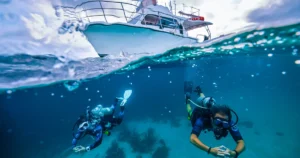
If you are planning your first underwater adventure in the UAE, one question comes up quickly: should you choose Deep Dive Dubai or a real open-water dive? It is a smart question, because both experiences can be exciting, memorable, and beginner-friendly, but they are not the same thing. One is an indoor, highly controlled experience inside the world’s deepest diving pool. The other puts you into natural open water, where conditions, marine life, and the overall feeling are very different. Understanding those differences can help you choose the option that fits your comfort level, travel goals, and expectations for scuba diving in Dubai. Deep Dive Dubai is officially recognized by Guinness World Records at 60.02 meters deep, while PADI describes open water diving as the real ocean, lake, or quarry component of scuba learning and certification.
For tourists researching scuba diving in UAE, this comparison is especially useful because Dubai offers both extremes. You can choose a dramatic, controlled indoor experience in fresh water with stable temperature and built-in supervision, or you can choose open water in and around Dubai, where the experience is shaped by the sea, weather, visibility, and the presence of marine life. PADI’s Dubai guide says prime open-water conditions usually occur from October to May, with water temperatures around 22–28°C and the best visibility during that period, while Deep Dive Dubai keeps its water at 30°C year-round.
This article will help you decide by breaking down the real differences between the two. You will see how the Deep Dive Dubai comparison plays out for beginners, travelers, nervous first-timers, certified divers, and anyone choosing between a unique attraction and a more natural underwater adventure.
Why This Choice Matters for First-Time Divers

A lot of travelers assume that all diving feels more or less the same. It does not. The difference between pool diving vs ocean diving is about much more than location. It changes how you prepare, how confident you feel underwater, what you see, how much the environment moves around you, and even what you take away from the experience afterward.
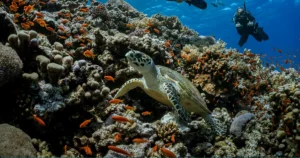
If you choose Deep Dive Dubai, you are choosing a carefully managed indoor setting designed to reduce outside variables. The water temperature stays stable, visibility is predictable, and the environment is themed as a sunken city. If you choose open water, you are choosing the sea itself, which means natural light, currents, changing visibility, and the possibility of reefs, wrecks, fish life, and a more traditional dive setting. PADI’s Dubai destination guide describes the local open-water scene as including artificial reefs, wrecks, offshore structures, sandy bottoms, coral growth, rays, turtles, reef sharks, cuttlefish, and schooling fish.
That is why this is not just a matter of which one sounds cooler. It is really about what kind of Dubai diving experience you want.
What Deep Dive Dubai Actually Offers
Deep Dive Dubai is not just a training pool. It is a large-scale indoor diving attraction themed like an abandoned underwater city. Officially, it contains 14 million liters of fresh water, is kept at 30°C, and allows divers to descend to 60 meters. The facility is also built around safety and observation, with large viewing windows and extensive underwater monitoring. For non-certified divers, Deep Dive Dubai says no experience is needed and that beginners can dive up to 12 meters after a short introduction and shallow-water practice.
That makes Deep Dive especially attractive for tourists who want a striking, polished, indoor scuba diving adventure Dubai is famous for. It is visually dramatic, highly controlled, and designed to feel special even before you get into the water. You are not simply floating in a training lane. You are exploring a themed underwater environment built to make the experience feel immersive and memorable.
For some travelers, that alone makes it the better choice. If your goal is to try something unique, iconic, and easy to fit into a city itinerary, Deep Dive Dubai has a strong advantage.
What Open Water Diving Really Means

When most travelers picture diving, they are imagining open water. That means the sea, not a controlled indoor pool. In the Dubai context, open water can include shore dives and boat dives around local sites, and it also connects to training pathways such as the PADI Open Water Diver course. PADI states that Open Water Diver is the first scuba certification level and that learners complete knowledge development, pool or pool-like practice, and four open-water dives as part of the certification process. PADI also says the course can be completed in as little as two to four days and leads to certification up to 18 meters.
This is important because “open water diving” can mean two slightly different things depending on the traveler. For some people, it means doing a guided ocean dive as a one-time experience. For others, it means beginning the route toward real diver certification and learning how to dive in natural conditions. Either way, the open-water option is more connected to long-term scuba skills than a one-off indoor attraction.
If you want your experience to feel like “real” diving in Dubai rather than a controlled dive environment, open water usually feels more authentic.
Deep Dive Dubai Comparison: Environment and Feel
The biggest difference in this Deep Dive Dubai comparison is the environment itself. Deep Dive Dubai is fresh water, indoors, temperature-controlled, and insulated from wind, waves, tides, and weather. Open water is the opposite. It is shaped by the sea. That means the entry, the light, the temperature, and the underwater view can all vary.
The practical result is that Dubai indoor dive vs sea dive feels like choosing between a controlled simulation of underwater adventure and the more unpredictable reality of actual ocean diving. That does not make one better than the other in every situation. It just means the emotional experience is different.
Inside Deep Dive Dubai, many beginners feel calmer because the setting is structured and stable. In open water, many divers feel more excited because the sea feels alive, natural, and less staged. One gives you controlled immersion. The other gives you natural immersion. That is really the heart of deep pool diving vs open water for first-time tourists.
Pool Diving vs Ocean Diving for Beginners
For beginners, pool diving vs ocean diving often comes down to confidence. If you are someone who feels nervous about currents, waves, sea depth, or outdoor conditions, Deep Dive Dubai may feel easier psychologically. You know the temperature is fixed, you know the visibility is consistent, and you know the setting has been built specifically for diving comfort and supervision. Deep Dive Dubai also states that try dives for non-certified guests begin with an introduction, shallow-water practice, and guided exploration to 12 meters.
Open water, on the other hand, can feel more rewarding if your goal is to experience the true sensation of scuba in the sea. Even if you start with a beginner-friendly dive, you are dealing with a real marine setting rather than a controlled freshwater facility. Many people love that authenticity. Others find it a little more intimidating at first.
So if your biggest priority is feeling calm, structured, and supported, Deep Dive often wins. If your biggest priority is feeling like you truly entered the ocean, open water usually wins.
Controlled Environment Diving vs Open Water
The phrase controlled environment diving vs open water captures one of the most important practical differences. In a controlled environment like Deep Dive Dubai, most of the major external variables are minimized. The water stays warm at 30°C, visibility is stable, and the physical layout is known in advance. There is also extensive facility monitoring and trained staff support built into the setup.
In open water, conditions can change by season, site, and day. PADI’s Dubai guide says the best local open-water conditions are typically from October to May, when visibility is strongest and temperatures range from 22–28°C, while summer may bring water as warm as 34°C along with reduced visibility.
This does not mean open water is unsafe. It means it is real. You are adapting to nature instead of diving inside a stable indoor environment. That distinction matters because some travelers are specifically looking for the comfort of control, while others are specifically looking for the thrill of the real sea.
Which One Feels More “Real”?
This question matters more than many people think. If by “real” you mean authentic scuba conditions, then open water is the clear answer. The sea has natural light, currents, marine life, and changing conditions. It feels connected to the larger world of scuba travel and ocean exploration.
If by “real” you mean a legitimate scuba experience with proper equipment, instruction, and underwater immersion, then both qualify. Deep Dive Dubai is not pretend diving. It is a genuine scuba experience in a real diving environment, just not in the ocean. Deep Dive Dubai also offers formal PADI courses, including Open Water Diver training, which shows that the facility is not only an attraction but also a recognized training center. On its course page, Deep Dive Dubai lists PADI Open Water Diver from AED 4,000 with training materials, equipment, and no prior experience required.
So the better question is not which one is real. It is which version of real you want: controlled underwater immersion or natural ocean immersion.
Beginner Diving Options Dubai: Who Should Start Where?
When people search for beginner diving options Dubai, they are usually asking one of two things. First, “Where will I feel safest and most comfortable?” Second, “Which option gives me the best first impression of scuba?”
If you are highly nervous, short on time, or mainly interested in a memorable one-time attraction, Deep Dive Dubai is often the better starting point. Its non-certified packages are built specifically for people with no experience, and the whole facility is designed around guided diving in a predictable setting.
If you are already quite excited about the sport itself and think you may want to keep diving after your trip, open water may be the better first step. PADI’s Open Water Diver route is designed to teach you foundational scuba skills and certify you for future diving without needing a professional guide every time.
That is why the best beginner option depends less on skill level and more on intention.
If You Want Maximum Comfort and Confidence

Deep Dive Dubai is often the easier recommendation for travelers who prioritize comfort. The water is warm year-round, the setting is indoor, and the environment does not depend on the weather. You do not need to think about seasonal visibility, waves, or sea conditions in the same way you would for open water. Deep Dive Dubai’s official information also emphasizes easy observation for non-diving companions and a facility built around a premium guest experience.
This matters for people who are:
nervous in open water, uneasy in darker or murkier conditions, worried about marine life, or simply looking for a smoother first experience. For them, deep pool diving vs open water is not a debate about which one is more adventurous. It is a question of where they are most likely to relax enough to enjoy themselves.
Comfort is not a small factor in scuba. It often determines whether your first dive feels stressful or unforgettable.
If You Want Marine Life and the Ocean Feeling
Open water has a clear advantage if you care most about marine scenery and the emotional feeling of diving in the sea. PADI’s Dubai guide describes local diving as featuring artificial reefs, wrecks, offshore structures, coral growth, sandy bottoms, and marine life such as rays, turtles, reef sharks, cuttlefish, and schooling fish. You may not see all of that on every dive, but the point is that open water connects you to a living ecosystem.
That connection is impossible to fully replicate indoors. Deep Dive Dubai has a remarkable environment, but it is a created setting, not a marine habitat. If your dream version of Dubai scuba diving includes fish, natural seabeds, and the feeling of drifting through the actual underwater world, open water is usually the better choice.
This is one reason many divers see the two experiences not as direct substitutes, but as different categories of adventure.
If You Want a One-Time Signature Experience
For many tourists, the deciding factor is not certification or marine life. It is whether the activity feels iconic. In that case, Deep Dive Dubai makes a strong case. It is the world’s deepest diving pool, themed like an underwater city, and built to deliver a striking visual experience. The facility’s official site emphasizes the scale, depth, freshwater volume, and uniquely designed interior.
If you are visiting Dubai and want a standout activity that feels very “Dubai” in its ambition and presentation, Deep Dive Dubai is easier to sell as a signature attraction. It is polished, distinctive, and easy to describe to others afterward.
Open water can absolutely be more meaningful for committed divers, but for some tourists, the indoor option simply feels more special as a bucket-list city experience.
If You Want Long-Term Scuba Value
Open water is the stronger choice if you are thinking beyond one vacation. PADI’s Open Water Diver course is the standard first certification level, and after completing it, divers can be certified to dive independently with another certified diver to a maximum of 18 meters. The course also includes pool or pool-like practice and four real open-water dives, which means you are learning transferable skills rather than just sampling the sensation of breathing underwater.
That makes open water a better investment for people who think this trip might be the start of a bigger hobby. If you see yourself diving again in another country, progressing to advanced courses, or wanting more freedom underwater, open water offers much more long-term value.
Deep Dive Dubai can still be part of that journey, especially because it also runs PADI courses, but if the question is which experience gives you a direct path into lifelong diving, open water wins.
Weather, Season, and Practical Planning
Another major advantage in the Dubai indoor dive vs sea dive decision is seasonal reliability. Open water around Dubai is best during the cooler season. PADI says prime conditions generally run from October to May, with 22–28°C water and the best visibility, while summer remains possible but is typically warmer and less clear.
Deep Dive Dubai, by contrast, is much less dependent on the season because the water is maintained at 30°C indoors year-round.
So if you are traveling in peak summer and want to avoid the extra complication of sea conditions, the indoor option becomes even more attractive. If you are visiting between autumn and spring and want the best natural scuba diving in Dubai conditions, open water becomes more compelling.
This is a practical difference, not just a stylistic one.
Certification, Skill Building, and What You Learn
If you are asking which option teaches you more, the answer is open water. PADI’s structure for Open Water Diver includes theory, pool or pool-like sessions, and four open-water dives, all aimed at building core scuba skills and preparing you for future dives. PADI also states the course can be completed in as little as two to four days.
Deep Dive Dubai’s non-certified experience is more about guided participation than full diver development. You will still learn basic skills and safety habits, but the goal is not the same. It is designed to let you experience scuba in a remarkable indoor setting, not necessarily to turn you into a fully certified diver in one session.
That is why people comparing controlled environment diving vs open water should think carefully about whether they want an experience or an education. Both teach something, but they do not teach the same thing.
So Which Experience Should You Choose?
Choose Deep Dive Dubai if you want the most controlled, comfortable, and visually dramatic first dive. It is ideal for nervous beginners, short-stay tourists, travelers visiting in hotter months, and anyone who wants a memorable one-off attraction with premium presentation. It is also a strong choice if you value stable conditions more than marine life.
Choose open water if you want authentic sea diving, natural underwater scenery, the possibility of marine life, and the strongest path toward long-term scuba skills and certification. It is ideal for travelers who want the real ocean feel and for anyone who thinks scuba may become more than a one-time holiday activity.
In simple terms:
Deep Dive Dubai is often the better first taste.
Open water is often the better long-term choice.
The Best Answer for Many Travelers: Both
For some tourists, the smartest answer is not one or the other. It is both. Deep Dive Dubai can be an excellent confidence-builder, especially if you are hesitant. It lets you get comfortable with breathing underwater in a predictable environment. Then, once your confidence grows, open water becomes much less intimidating.
That progression makes sense because it combines the strengths of both worlds. You get the security and spectacle of the deep indoor environment, then the authenticity and skill development of the sea. Since Deep Dive Dubai also offers formal PADI training and says some courses may be completed partly at its facility and partly with partner centers in Fujairah or Dubai, the two worlds are not as separate as they may first appear.
So the real decision may not be “which one forever?” It may simply be “which one first?”
Final Thoughts
The best choice between Deep Dive Dubai and open water depends on what kind of memory you want to create. If you want a smooth, controlled, high-impact attraction that is easy to fit into a city holiday, Deep Dive Dubai is a powerful option. If you want the feeling of real ocean diving and the strongest gateway into the broader world of scuba, open water is the better fit.
For travelers comparing scuba diving in Dubai with an eye on comfort, Deep Dive Dubai often feels more approachable. For travelers thinking about the deeper meaning of scuba diving in UAE and the possibility of future dives around the world, open water usually offers more long-term value. Neither choice is wrong. They simply serve different goals.
So before you book, ask yourself one honest question: do you want your first dive to feel easier, or do you want it to feel more natural? Your answer will usually tell you exactly which experience you should choose.