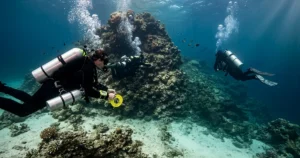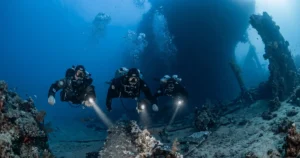
Recreational divers already know wreck diving through the PADI Wreck Diver specialty: navigation around a wreck’s structure, an introduction to penetration lines, and the discipline to assess a site before deciding whether to go inside. Technical wreck diving UAE is a different discipline entirely, one built for wrecks that sit beyond recreational depth and decompression limits.
Where Recreational Wreck Training Stops
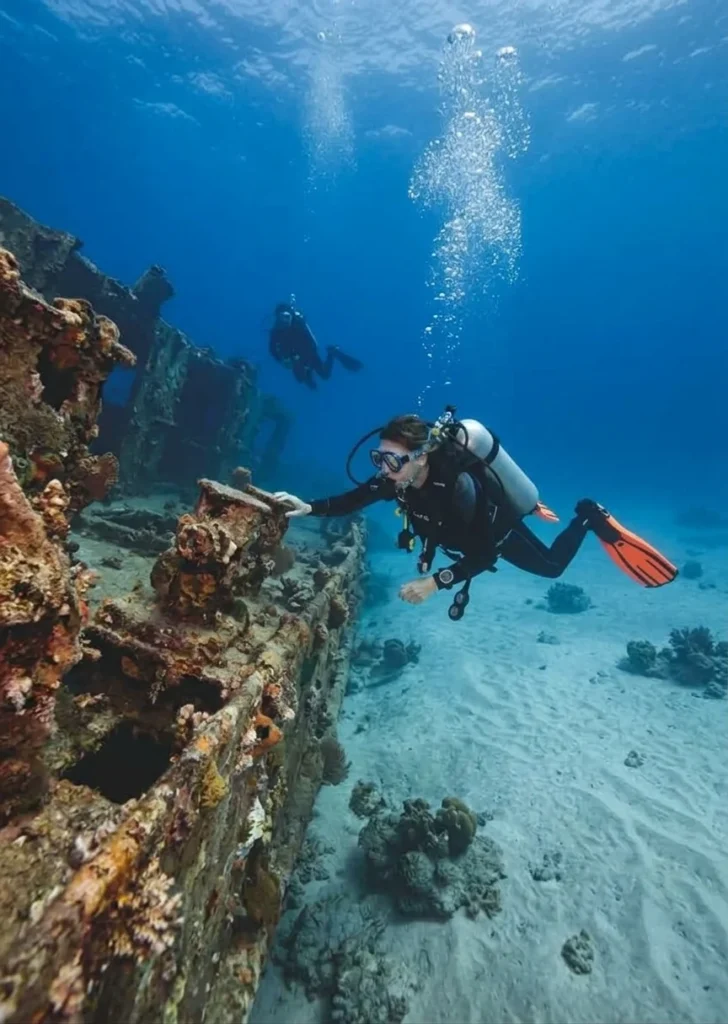
The PADI Wreck Diver specialty, the recreational-level course, teaches you how to navigate a wreck’s exterior and interior safely within no-decompression limits, typically within recreational depth ranges. That training is genuinely valuable, but it was never built for wrecks sitting at 60, 70, or close to 90 meters, where a no-decompression ascent is not an option and gas planning has to account for staged decompression stops on the way back up.
That is the real line between the two disciplines. It is not about confidence or experience alone, it is about what the dive profile physically requires.
What Technical Wreck Diving UAE Actually Involves
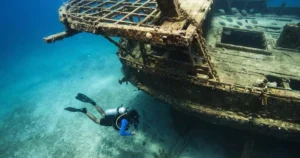
Deep technical wreck sites are a real category of diving in the wider region, generally described as requiring mixed-gas certification, since air alone becomes narcotic and physiologically limiting at real depth, along with planned decompression stops on ascent, since there is no direct route back to the surface once you have spent real time at depth. Nemo Diving Center’s own site does not name or confirm a specific deep technical wreck of this kind as one of its regular trip destinations, so treat any such site as something to raise directly with Nemo rather than a confirmed, bookable trip. Nemo’s own named Fujairah wrecks, Inchcape 1, 2, and 10, sit at recreational depths of roughly 22 to 23 meters, diveable with a standard recreational certification on the exterior and PADI Wreck Diver specialty, still within recreational limits, for interior penetration, not technical diving.
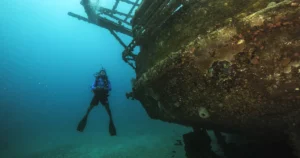
Deep technical wrecks in general are frequently silty inside, meaning visibility in the holds, engine room, and accommodation decks can collapse almost immediately once disturbed. A penetration line is treated as mandatory for any real technical wreck entry, not optional, since losing visual reference inside a wreck with zero visibility and a ceiling overhead is one of the most serious risks in all of diving. Strong currents at certain tide states add another layer of planning on any deep wreck dive, which is why such dives are typically scheduled around slack tide specifically. Confirm exact site details, depth, and conditions directly with Nemo before planning around any specific technical wreck trip.
The Certification Path to Technical Wreck Diving
Reaching these sites safely starts with Nemo’s core Tec Deep pathway. Tec 40 and Tec 45 build the decompression planning and gas management skills that any technical wreck dive requires, even before penetration enters the picture. Tec 50 extends that further with multi-stage decompression across multiple gases. For wrecks at the deeper end of the regional range, Trimix certification becomes necessary, since helium-based gas mixes are what make functioning clearly at those depths possible at all.
For the complete order of these certifications and what each one requires, see the Technical Diving Courses in Dubai hub.
Skills Recreational Wreck Training Doesn’t Cover
Beyond depth and gas planning, technical wreck diving adds real skills the recreational specialty never touches: managing decompression obligations while also managing a penetration line, handling multiple stage and deco cylinders in a confined overhead space, and executing emergency procedures, like an out-of-gas scenario, in an environment where a direct ascent to the surface is not available. This is exactly the kind of overhead-environment discipline Nemo’s technical pathway builds from Tec 40 onward, not something added on top afterward.
Team Diving Inside a Wreck
Technical wreck penetration is never a solo activity, and it is rarely even a simple buddy-pair activity in the way recreational diving often is. A real penetration team maintains constant awareness of each member’s gas supply, position on the line, and time elapsed, since a problem discovered deep inside a wreck has to be solved with whatever gas and time remain, not by simply heading for the surface. This is the same team discipline built across the whole Tec Deep pathway, just applied under an overhead ceiling where the margin for miscommunication is considerably smaller.
Getting Ready for a Technical Wreck Dive
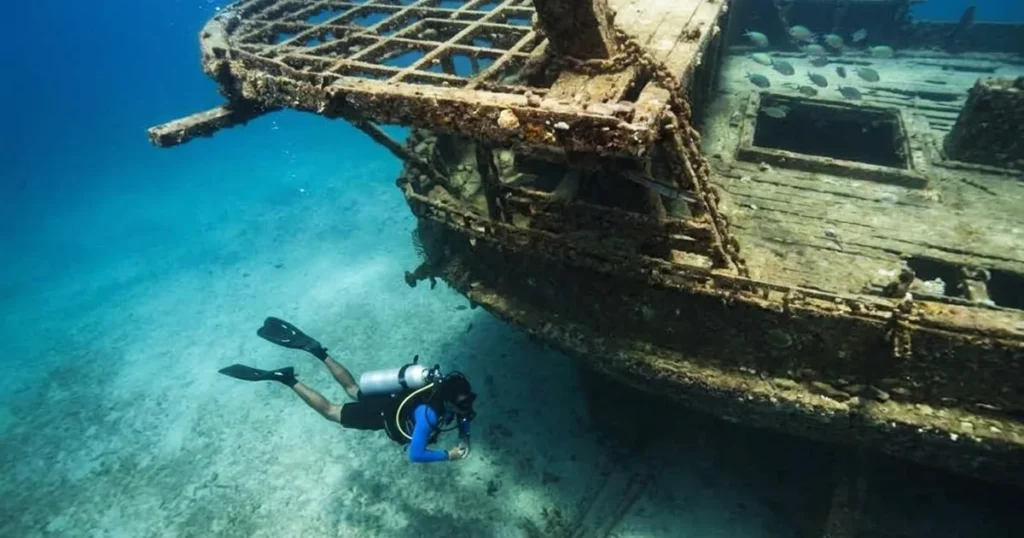
If your current certification stops at the recreational Wreck Diver specialty, the realistic next step is not booking a technical wreck trip directly, it is starting the Tec Deep pathway itself. What It Takes to Start Technical Diving in Dubai covers the real prerequisites honestly, and Which Technical Diving Course Should You Start With? helps place you accurately within the six-level pathway based on what you already hold.
Frequently Asked Questions
Is technical wreck diving the same as the PADI Wreck Diver specialty?
No. The PADI Wreck Diver specialty is recreational-level training within no-decompression limits. Technical wreck diving applies to wrecks requiring mixed-gas certification and planned decompression stops, a genuinely different risk category.
What certification do I need for the deepest regional wrecks?
Genuinely deep technical wrecks, wherever they’re found, require Trimix-level certification, since air and standard enriched air mixes aren’t sufficient at that depth. Nemo’s own site doesn’t confirm a specific named UAE wreck at this depth as a regular trip offering, so confirm current site-specific options directly with Nemo rather than assuming a particular site is bookable.
Why is a penetration line mandatory on these dives?
Visibility inside these wrecks can collapse almost instantly once silt is disturbed. A line is the only reliable way to find your way back out if that happens.
Can I go straight from PADI Wreck Diver to technical wreck diving?
No. Technical wreck diving depends on the certifications in Nemo’s Tec Deep pathway, particularly the decompression and gas planning skills built from Tec 40 onward, not on recreational wreck training alone.
Why do currents matter so much at these sites?
Strong currents at certain tide states significantly increase risk during entry, exit, and time spent inside the wreck, which is why these dives are typically planned around slack tide specifically.
Ready to Build Toward Technical Wreck Diving?
See the full Technical Diving Courses in Dubai hub to find your starting point, or contact Nemo Diving Center directly to discuss the realistic path from where you are now.
Nemo Diving Center is located at Azure Residences, Palm Jumeirah, Dubai, with a dive base at Royal Beach, Dibba Al-Fujairah. Bookings are made online or by contacting the team directly at nemodivingcenter.com.