Scuba Diving in Dibba Al-Fujairah, on the UAE’s east coast along the Gulf of Oman, is home to some of the best dive sites Fujairah has to offer, and unlike Dubai’s Arabian Gulf side, its reefs sit in clearer, current-swept water. If you’re trying to work out which site to book first, here’s a real side-by-side look at the four sites divers ask about most: Dibba Rock, Martini Rock, Hole in the Wall, and Shark Island.
Why Dive in Dibba Al-Fujairah?

| Site | At a Glance | Suitable For |
| Dibba Rock | Depth 4–16 metres. Marine protected area since 2008, recovering from a red tide event with the help of placed artificial reefs. Turtles, moray eels, cuttlefish, snappers, fusiliers and barracuda, plus leopard, blacktip and guitar sharks. Shallower on the west side, with night diving for bioluminescent plankton. | Open Water and above, the most beginner-friendly of the four |
| Martini Rock | Depth 10–22 metres, rising to within 3 metres of the surface, a pinnacle that gave the site its name. Snapper, triggerfish, lionfish, scorpionfish, fusilier, broomtail wrasse, moray eels, nudibranchs and large starfish, set against orange, purple and yellow soft coral. | Advanced Open Water, depth range suits confident buoyancy control |
| Hole in the Wall | Depth 18–25 metres. A cave-like formation with swim-throughs, suited to advanced divers. Turtles, rays, cuttlefish, jawfish, and reef sharks are sometimes seen moving through the tunnel structure. | Advanced Open Water, overhead-environment awareness recommended |
| Shark Island | Also called Khorfakan. Depth around 17 metres. True to its name, a refuge for blacktip reef sharks, most often seen in shallow water during the cooler months, alongside anemones, clownfish, turtles and cow-tail rays. | Open Water and above, snorkelers can stay on the shallower west side |
Why these four specifically?
Between them, they cover the full range of what Fujairah diving is actually like: Dibba Rock is the easiest entry point, Martini Rock and Hole in the Wall are the two sites that reward a bit more experience, and Shark Island is simply the site people ask about by name once they’ve heard what’s regularly seen there.
Dibba Rock is the most beginner-friendly of the four, shallow on its western side, protected-area status since 2008, and reliably busy with reef life. It’s also the closest site to Our Fujairah Diving Center: Why Choose the Dibba Al-Fujairah Branch, which runs guided trips out of Royal Beach.
Martini Rock is where photographers linger, the pinnacle shape means you can circle it from the shallow crown down to the deeper base and back on a single tank, and the marine life density rivals a natural aquarium. Divers who’ve done this site more than once often say the same thing: no two dives look the same, since the resident fish activity shifts with the season.
Hole in the Wall and Shark Island are the two sites worth building experience toward: the swim-through at Hole in the Wall and the shark encounters at Shark Island (also called Khorfakan) are the two most-searched reasons divers come to this stretch of coast specifically. A recent Nemo diver described exactly this kind of variety on a single trip:
“Great gal day of diving again with Nemo! The whole team as welcoming as always… What a day today! Ray, turtles, big, small, morays, lion fish, pipe fish, trigger fish, cuttlefish (3 at the same time!), and much more, with looong dives as I like them!” — jochina, TripAdvisor
That kind of sighting density, several species inside a single dive is exactly what these four sites are known for locally, not a one-off.

Also Nearby
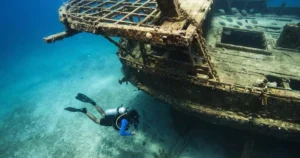
For wreck divers, Inchcape 1 sits at 30 metres and hosts stingrays, lionfish and frogfish, it’s the shallowest and most accessible of the three Inchcape wrecks, purpose-sunk to build an artificial reef structure the same way the other two Inchcape sites were. For a full breakdown of all three, including which one suits your certification level, see Shipwreck Diving Fujairah Inchcape: The 3 Wrecks Compared. Sharm Rocks (“Three Pinnacles”), 8–15 metres, rounds out the list with vibrant coral gardens, anemones and clownfish.
The best time to dive any of these four sites is October to May, when water temperatures sit between 22–28°C and visibility can reach 20 metres.
Tips for an Amazing Diving Experience
- Choose a reputable dive operator: Many dive centers for Scuba Diving in Dibba Al-Fujairah offer guided tours, ensuring safety and the best diving experience.
- Check equipment before diving: Ensure that your gear is in good condition, especially if renting from a dive shop.
- Respect marine life: Avoid touching corals or disturbing sea creatures to preserve the underwater ecosystem.
- Stay hydrated and well-rested: Diving can be physically demanding, so proper hydration and rest are essential for a great experience.
Frequently Asked Questions
Which of these four sites is best for a first Scuba Diving in Dibba Al-Fujairah?
Dibba Rock. It’s the shallowest of the four (4–16 metres), shore-adjacent, and its marine-protected-area status means the reef life is unusually reliable for a first visit.
Do I need Advanced Open Water certification for Hole in the Wall?
It’s recommended rather than strictly required for guided exterior swim-throughs, but the depth range (18–25 metres) and the overhead-environment nature of the tunnel structure mean it suits divers with some experience beyond Open Water more comfortably.
When is the best time to see blacktip reef sharks at Shark Island?
The cooler months, roughly November through March, when sightings in shallow water are most consistent.
Is night diving available at any of these four sites?
Yes, Dibba Rock in particular is known for night dives, with bioluminescent plankton visible after dark.
How do these sites compare to diving in Musandam?
Musandam sits further from Dubai and requires crossing into Oman, but offers similar depth ranges and current-driven visibility. Fujairah’s four sites are the closer option for a day trip without a border crossing.
Can snorkelers enjoy any of these sites, or are they all dive-only?
Shark Island’s shallower west side is snorkel-friendly; the other three are better suited to certified divers given their depth and structure.
For the full picture on getting here, certification options, and what else the branch offers, start with Diving in Fujairah: The Complete Guide.