Ask any regular around here where to go for shipwreck diving Fujairah Inchcape style, and the same three names come up: Inchcape 1, Inchcape 2, and Inchcape 10. These purpose-sunk wrecks form the backbone of Fujairah’s wreck-diving scene, but they’re not interchangeable, each sits at a different depth and suits a different certification level. This guide breaks down what’s known about each wreck so you know which one to book.
Why Fujairah’s Wrecks Are Worth Diving
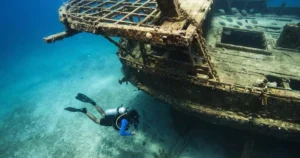
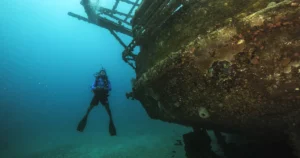
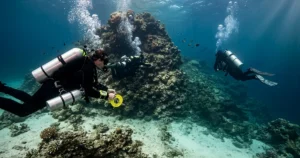
Unlike wrecks created by accident or wartime loss, the Shipwreck Diving Fujairah Inchcape wrecks were purpose-sunk to create artificial reef structures, a common and effective approach to building marine habitat in areas without extensive natural reef. Years of coral colonization and fish activity have transformed each wreck into a genuine ecosystem, not just a rusting hull. Combined with Fujairah’s generally strong visibility on the Gulf of Oman side, these wrecks offer some of the most photogenic structure diving in the UAE.
Inchcape 1
Inchcape 1 is generally considered the most accessible of the three wrecks. Its structure is largely intact, with swim-throughs that don’t require full wreck penetration training, making it a common introduction to wreck diving for divers who haven’t yet taken a specialty wreck course.
Best suited to: Newly certified divers and those looking for their first wreck-diving experience.
Inchcape 2
Inchcape 2 lies at approximately 22 meters and features more broken-up structure than Inchcape 1, which actually works in its favor for marine life, the fragmented sections create more nooks and overhangs for reef fish and moray eels. Current here tends to be a bit more noticeable than at Inchcape 1.
Best suited to: Advanced Open Water divers and above, comfortable with moderate current and slightly reduced structural predictability.
Inchcape 10
Inchcape 10 is the largest of the three sister vessels and has a documented history: built in 1981 as an offshore supply ship originally named “Mariam,” she was bought by Inchcape Shipping Services and renamed “Jetwise” in 1998, then spent roughly five years running crew and supplies to ships and oil rigs out of Fujairah before being decommissioned. She was deliberately sunk on June 28, 2003, with permission from Fujairah authorities, to form an artificial reef.
Inchcape 10 lies at approximately 23 meters, sitting upright with the bow facing north. The wreck hosts dense marine life, including schooling fusiliers and bannerfish, jacks, filefish, lionfish, snappers, moray eels, and occasional stingrays and barracuda. Divers are generally advised to hold an Advanced Open Water certification or higher before exploring it in full.
Best suited to: Advanced Open Water divers and above, looking for the most developed reef ecosystem of the three wrecks.
Quick Comparison
| Inchcape 1 | Inchcape 2 | Inchcape 10 | |
|---|---|---|---|
| Depth | Shallower, most accessible | ~22 meters | ~23 meters |
| Structure | Largely intact | More broken/fragmented | Intact, upright |
| Penetration | Swim-throughs only | Limited | Exterior recommended; interior penetration for specialty-trained divers |
| Certification recommended | Open Water (guided) | Advanced Open Water+ | Advanced Open Water+ |
| Best for | First wreck dive | Building wreck experience | Rich marine life, developed reef ecosystem |
Do You Need Wreck Diving Certification?
You can dive around the exterior of these wrecks with a standard recreational certification, guided by an instructor or divemaster, provided you meet the certification level recommended for that specific site. What changes is interior access. Going inside a wreck, beyond simple swim-throughs with natural light and a clear exit, introduces overhead-environment risks that recreational training doesn’t cover: reduced visibility, disorientation without a direct route to the surface, and the need for backup gas planning. As a general PADI standard, the Wreck Diver specialty course trains divers for these scenarios, and most operators expect it, or equivalent experience, before allowing interior penetration dives at any wreck site.
If you’re building toward wreck certification, our team can advise on a natural progression: start with Inchcape 1 as a guided exterior dive, build experience at Inchcape 2 and Inchcape 10, then pursue Wreck Diver specialty training before attempting interior penetration.
Night Diving the Wrecks
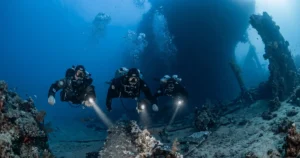
Fujairah’s Inchcape wrecks take on a different character after dark. Night diving reveals nocturnal marine life rarely seen during the day, octopus, crustaceans, and moray eels are far more active, and the wreck structure itself looks completely different under torchlight. Night dives at the Inchcape sites are generally better suited to certified divers with some prior daytime familiarity with the site, since navigating a wreck exterior in low visibility is easier once you’ve already seen the layout in daylight.
Planning a Wreck Dive Trip in Fujairah
For the fuller context on getting to Fujairah, choosing a dive center, and combining wreck dives with other sites, start with our complete guide: Diving in Fujairah: The Complete Guide (Dibba Al-Fujairah Branch). You can also read more about the dive center running these trips in Our Fujairah Diving Center: Why Choose the Dibba Al-Fujairah Branch.
“We went as an office group for team building Snorkel and Diving activity… We visited Dibba Rock for snorkeling and diving and some of us also did a dive at the Artificial Reef… The marine life was spectacular – shoals of small, midsized and big fish – angels, puffers et al. Also saw plenty of moray eels, urchins and a few turtles, snakes, a somewhat angry crab 🙂 and even a small [reef] shark. Visibility was superb and the experience was life-changing.” — Saeeda K., TripAdvisor
Frequently Asked Questions
What’s the difference between Inchcape 1, 2, and 10?
Inchcape 1 is the most accessible and largely intact, suited to newer divers. Inchcape 2 sits at around 22 meters with more fragmented structure and stronger current. Inchcape 10, the largest of the three, sits at around 23 meters and hosts the most developed marine life of the three wrecks.
Do I need special certification to dive the Inchcape wrecks?
Exterior diving is possible with a recreational certification matched to the site’s recommended level, generally guided by an instructor or divemaster. Interior penetration requires PADI Wreck Diver specialty training or equivalent experience.
Which Inchcape wreck is best for a first wreck dive?
Inchcape 1 is generally recommended for a first wreck-diving experience thanks to its largely intact structure with simple swim-throughs.
Can beginners dive the Inchcape wrecks?
Newly certified Open Water divers can dive Inchcape 1 under guided supervision. Inchcape 2 and Inchcape 10 are generally recommended for divers holding an Advanced Open Water certification or higher.
Is night diving available at the Inchcape wrecks?
Yes, night dives are offered for certified divers, typically after some daytime familiarity with the wreck site, since nocturnal marine life activity and reduced visibility change the diving experience significantly.
What marine life lives on the Inchcape wrecks?
Years of coral colonization have turned these purpose-sunk wrecks into real reef ecosystems. Inchcape 10 in particular hosts schooling fusiliers, bannerfish, jacks, filefish, lionfish, snappers, moray eels, and occasional stingrays and barracuda.