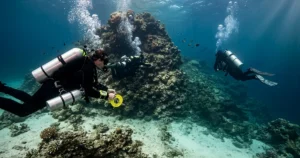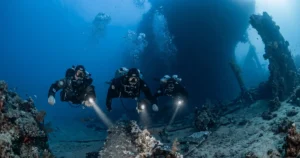
If you’ve been searching for diving in Fujairah, you’ve probably noticed it doesn’t get talked about as much as Dubai or the Musandam Peninsula, and that’s exactly why it’s worth your attention. Fujairah is the only emirate that sits directly on the Gulf of Oman, which means its reefs are shaped by open ocean currents rather than the shallow, silty waters of the Arabian Gulf. The result is clearer water, healthier coral growth, and a far higher chance of encountering big marine life like whale sharks, eagle rays, and green turtles.
This guide is written by the team at Nemo Diving Center’s Dibba Al-Fujairah branch, a PADI 5-Star dive center operating year-round out of its Royal Beach base, one of the region’s best-positioned locations for reaching Fujairah’s dive sites. Below, you’ll find everything you need to plan a trip: the dive sites worth your bottom time, the certification path that gets you in the water, the marine life you can expect to see, and the logistics of getting here from Dubai, Abu Dhabi, or Sharjah.
Why Diving in Fujairah Instead of Dubai or Musandam?
Three things set Fujairah apart from the rest of the UAE’s dive destinations:
- Water clarity. Because Fujairah faces the open Gulf of Oman rather than the enclosed Arabian Gulf, visibility is consistently better than Dubai’s, especially outside the summer plankton bloom.
- Healthier reef structure. Coral cover around sites like Dibba Rock and Shark Island has recovered well compared to the more industrialized coastline further west, supporting a denser range of reef fish and invertebrates.
- Big-animal encounters. Fujairah sits on a seasonal migration corridor. Whale sharks, manta and eagle rays, and green and hawksbill turtles are sighted here with a frequency that’s rare elsewhere in the UAE.
If you’re deciding between destinations, our dedicated comparison, Fujairah vs Musandam Diving: Which Destination Should You Choose, breaks down conditions, travel time, and marine life side by side.
Diving in Fujairah at a Glance
| Details | |
|---|---|
| Location | East coast of the UAE, Gulf of Oman, based in Dibba Al-Fujairah |
| Dive center | Nemo Diving Center, PADI 5-Star dive center, Royal Beach, Dibba Al-Fujairah branch |
| Typical visibility | 10–25 meters depending on season |
| Water temperature | Ranges seasonally, see our full water temperature and visibility guide |
| Skill levels | Beginner-friendly shore and boat sites through advanced wreck and drift dives |
| Best known for | Wreck diving, whale shark season, turtle and coral reef sites, snorkeling for non-divers |
Our Fujairah Diving Center: The Dibba Al-Fujairah Branch
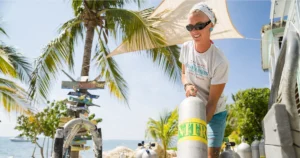
Nemo Diving Center’s Dibba Al-Fujairah branch was set up specifically to give divers faster access to the emirate’s best sites, Dibba Rock, Shark Island, and the Inchcape wreck series are all a short boat ride away, instead of the longer transfers required from Dubai-based operators. As a PADI 5-Star center based at Royal Beach, the branch runs the full spectrum of PADI courses, guided dives for certified divers, and shore-based snorkeling trips.
For a full walkthrough of the facility, instructor team, and why we chose this location, read Our Fujairah Diving Center: Why Choose the Dibba Al-Fujairah Branch.
Getting Certified: PADI Courses in Fujairah
Fujairah is one of the more forgiving places in the UAE to learn to dive. Sheltered bays around Dibba give beginners calm, shallow conditions for skill practice, while nearby sites like Dibba Rock are close enough for open-water dives without a long boat transfer.
If you’re brand new to diving, start with a Discover Scuba Diving session, a short, supervised introduction that doesn’t require certification. If you’re ready to commit, the PADI Open Water Diver course is the internationally recognized entry point that lets you dive independently (with a buddy) anywhere in the world.
Full breakdowns of both paths:
- PADI Open Water Course Fujairah: Complete Certification Guide
- Discover Scuba Diving Fujairah: A First-Timer’s Guide
Fujairah Dive Sites: Where to Go
Fujairah’s dive sites cluster into a few distinct zones, each suited to different experience levels.
Dibba Rock and Shark Island
These two sites anchor most day-boat itineraries out of Dibba. Dibba Rock is a shallower, current-sheltered site good for newer divers and photographers, with dense soft coral and regular sightings of moray eels and lionfish. Shark Island sits further offshore, with a rockier profile and a higher chance of pelagic encounters, reef sharks, rays, and schooling barracuda are commonly reported here.
The Inchcape Wrecks
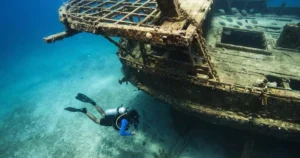
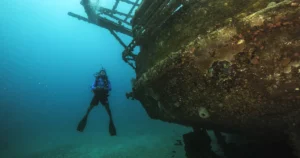
Three purpose-sunk wrecks, Inchcape 1, Inchcape 2, and Inchcape 10, form Fujairah’s signature wreck-diving circuit. Inchcape 10, the largest of the three sister vessels, was deliberately sunk in 2003 to form an artificial reef and now sits upright at roughly 23 meters. Divers are generally advised to hold an Advanced Open Water certification or higher before exploring these wrecks in full. Our full comparison, Shipwreck Diving Fujairah Inchcape: The Three Wrecks Compared, covers each wreck’s history, depth, and which one suits which experience level.
Snorkeling Sites and Snoopy Island
Not everyone in your group needs to be a certified diver to see Fujairah’s marine life. Shallow reef flats near Snoopy Island and around Dibba give snorkelers a close-up view of coral gardens and reef fish without needing tanks. See Snorkeling Fujairah: Best Spots & What You’ll See for a full site guide.
Marine Life You Can Expect to See
Fujairah’s position on the Gulf of Oman puts it on a seasonal path for some of the region’s most sought-after marine life:
- Whale sharks: seasonal but increasingly well-documented sightings
- Eagle rays and stingrays: regularly spotted over sandy patches near Dibba Rock
- Green and hawksbill turtles: resident populations seen on nearly every dive
- Coral reef fish: lionfish, moray eels, clownfish, and dense schools of snapper and fusilier
For sighting patterns, seasonality, and identification tips, read our full guide: Marine Life Fujairah Coral Reef: Whale Sharks, Turtles & Rays.
Planning Your Trip: Packages, Logistics & Timing
What’s Included in a Fujairah Dive Trip
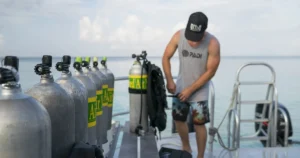
Dive day structures vary by trip type. PADI course packages include course materials, in-water training, and full equipment for the duration of the course. Guided boat dives for already-certified divers generally include boat transport, tank and weight rental, and guide supervision, with full gear rental (BCD, regulator, wetsuit) available as an add-on for divers who’d rather not travel with their own equipment. For a full breakdown of what’s typically bundled by trip type, see Diving Price Package Fujairah: What’s Included in Each Trip.
Getting to Fujairah from Dubai, Abu Dhabi & Sharjah
Fujairah is reachable as a day trip from every major UAE emirate, the drive from Dubai typically takes around 1.5 to 2 hours via the E84 (Sheikh Khalifa Highway) through the Hajar Mountains. If you’re not driving yourself, many operators including Nemo Diving Center run scheduled transport for day-trip divers. Full routes and timing: Day Trip Diving Dubai to Fujairah: Routes & Timing.
Best Time to Dive
Water temperature, visibility, and the likelihood of whale shark encounters all shift with the seasons. Before you book, check Best Time to Dive Fujairah: Seasons, Temp & Visibility to match your trip dates to the conditions you want.
“We had an absolutely amazing experience with Nemo Diving Centre in Dibba Fujairah! Whether you’re a complete beginner, just looking to refresh your diving skills or an advanced diver, this is the perfect place to go… And the underwater world is simply breathtaking, there is so much to see, including turtles, rays and even cuttlefish!” — Tanja K., Google Reviews
A Note on Pearl Diving Heritage
Long before scuba equipment reached the Gulf of Oman, Fujairah’s coastal communities relied on free-diving for pearls, a tradition that shaped the region’s relationship with the sea for generations. While recreational scuba diving today is a very different activity, divers with an interest in the UAE’s maritime history will find that pearl diving UAE heritage adds useful context to the reefs and wrecks you’ll explore on a modern dive trip.
Is Fujairah Right for Your Skill Level?
- Never dived before? Start with Discover Scuba Diving, then progress to Open Water certification if you enjoy it.
- Newly certified? Dibba Rock and Inchcape 10 are reasonable starting points for building confidence at depth.
- Advanced diver? Shark Island’s deeper profile offers more challenging conditions.
- Traveling with non-divers? Snorkeling around Snoopy Island keeps the whole group in the water together.
Ready to book your Fujairah dive trip? See our Fujairah Diving Trips
for pricing, dates, and availability.
Frequently Asked Questions
Is Fujairah good for diving compared to other UAE destinations?
Yes, Fujairah faces the open Gulf of Oman rather than the shallower Arabian Gulf, which generally means better visibility, healthier coral, and a higher chance of encountering larger marine life such as turtles, rays, and seasonal whale sharks than sites closer to Dubai.
Do I need to be certified to dive in Fujairah?
No. First-timers can join a Discover Scuba Diving session, a short supervised introduction that doesn’t require prior certification. If you want to dive independently with a buddy, a PADI Open Water certification is the standard entry-level qualification.
What marine life will I see diving in Fujairah?
Common sightings include green and hawksbill turtles, eagle rays, moray eels, lionfish, and dense schools of reef fish. Whale sharks are seen seasonally, and reef sharks are occasionally reported around sites like Shark Island.
How do I get to Fujairah for a dive trip from Dubai?
Fujairah is roughly a 1.5 to 2-hour drive from Dubai via the E84 (Sheikh Khalifa Highway), making it a realistic day trip. Many dive centers, including Nemo Diving Center, also offer scheduled transport for day-trip divers coming from Dubai, Abu Dhabi, or Sharjah.
What’s the best time of year to dive in Fujairah?
Conditions vary by season, water temperature, visibility, and whale shark activity all shift throughout the year. Check our seasonal guide to match your travel dates with the conditions and marine life you’re hoping to see.
Can beginners dive the Inchcape wrecks?
Some of the Inchcape wrecks sit at more accessible depths than others. Divers are generally advised to hold an Advanced Open Water certification or higher before exploring the wreck series in full. Our wreck comparison guide breaks down which wreck suits which experience level.
More on Fujairah Diving
Dive Deeper Into Fujairah
Six more in-depth guides cover Fujairah’s dive sites, beaches, and safety essentials in full detail:
- Best Dive Sites Fujairah: Depth & Marine Life Guide
- Top Fujairah Beaches Dive Guide: Relax & Explore
- Fujairah’s Remarkable Diving Sites
- Artificial Reef Fujairah: What You’ll See Underwater
- Top 10 Scuba Diving Spots in Dubai and Fujairah for Every Skill Level
- Diving Safety Fujairah: Essential Tips & Guidelines
More Fujairah Reading
- Getting to Know the Marine Life at Dibba Rock
- Saving a Sea Turtle in Distress at Dibba Rock, Fujairah
- Inchcape 1 & 2 Wreck Diving in Fujairah: What to Expect
- Inchcape 10 Wreck Diving in Fujairah
- Wildlife Encounters at Car Cemetery in Fujairah
- Diver’s Guide to Snoopy Island: Best Diving Conditions & Tips
- 3 Reasons: Fujairah Should Be Your Next Travel Destination
- Fascinating Marine Life in Fujairah
- Tips to Enjoy Night Diving in Fujairah
- Marine Life Calendar: What You’ll See Each Month in Fujairah
- Exploring the Best Scuba Diving Deals in Dubai and Fujairah
- Rewarding Clean-Up Dive for Fujairah Sea
- Scuba Diving in Dubai vs Fujairah: Which Is Better?